
Table of Contents
Severe storms can leave trees split, leaning, uprooted, or resting against roofs, fences, vehicles, and utility lines. After a severe storm, the wrong move can create a second emergency. Emergency tree removal should begin with one priority: keeping people away from unstable trees and damaged limbs until the danger is properly assessed.
Homeowners across Northern Kentucky can face risks that are not obvious from the ground. A tree may still look upright while cracked roots, a weakened trunk, or suspended branches make failure possible without warning. Professional evaluation is especially important when storm damage affects a tree close to a home, driveway, road, or utility connection. Storm-damaged tree removal should focus on controlling immediate hazards before cleanup or property restoration begins.
Immediate Steps to Take After Storm Damage
Do not begin cutting branches or pulling debris simply because part of the tree appears reachable. Storm-damaged wood can remain under significant tension, and branches or trunk sections may move suddenly when that tension is released. Keep children, pets, vehicles, and unnecessary foot traffic away from the damaged area. If a tree or branch is touching or near a damaged power line, assume the line is energized, stay well clear, and contact the utility provider or appropriate emergency authority. Do not attempt to move the tree or branch yourself. If property damage has occurred, take photographs only from a safe location for insurance documentation and professional assessment.
Warning Signs That Require Professional Tree Removal
The hours after severe weather can be especially dangerous because saturated soil, broken roots, split trunks, and hanging limbs may continue to shift. A careful response protects people first and prevents avoidable property damage.
Keep Everyone Outside the Fall Zone
Estimate where the tree or damaged limbs could fall and stay well beyond that area. Never stand beneath hanging branches or beside a leaning trunk for a closer inspection.
Look for Major Structural Damage
Visible trunk splits, exposed roots, broken leaders, large hanging limbs, or a sudden change in lean can signal instability. A tree does not need to be fully uprooted to become dangerous.
Avoid DIY Chainsaw Work
Storm debris may be twisted, compressed, or suspended under tension. Cutting the wrong section can trigger rapid movement, kickback, or collapse. Hazardous tree removal requires control over both the damaged tree and the surrounding work area.
Protect Access to the Property
If a tree blocks a driveway or entrance, avoid pulling large sections with a vehicle, rope, or small equipment. A damaged trunk can roll, split further, or move in an unexpected direction once force is applied.
Contact a Qualified Tree Service
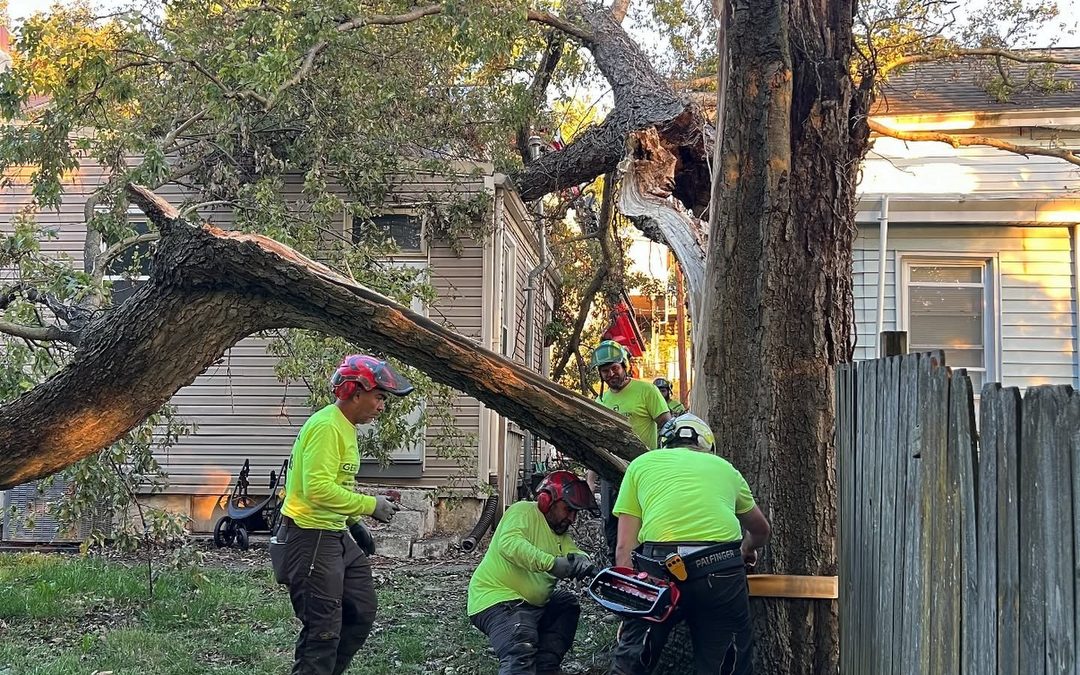
Gerrein Green offers 24-hour emergency tree service for urgent situations. A professional assessment can determine the safest removal method while reducing unnecessary impact on nearby trees, lawns, structures, and other property features.
Professional Rigging for Controlled Tree Removal
Understanding why professional rigging matters becomes important when a damaged tree cannot safely fall into an open area. Homes, fences, landscaping, utility connections, neighboring property, and remaining sections of the tree may restrict every movement. Rigging gives trained crews greater control over the direction and speed of branches or trunk sections as material is lowered. In difficult situations, mechanical or crane-assisted methods can help lift heavy sections away from structures instead of allowing those sections to drop freely.
That control is valuable during emergency tree removal because storm damage can completely change a tree’s normal balance and load distribution. Gerrein Green can use climbing, rigging, traditional felling, and advanced mechanical crane-assisted removal based on the condition of the tree and the limitations of the site.
When Does a Storm-Damaged Tree Need Removal?
Not every damaged tree needs to come down. Smaller broken limbs may be addressed through proper pruning, while serious structural failure can make removal the safer choice. The decision should be based on remaining stability, not appearance alone.
Removal may be necessary when the trunk is badly split, a major part of the root plate has lifted, the tree has developed a dangerous lean, or large structural limbs have failed. Existing decay can increase the risk because a storm may expose weaknesses that were already developing inside the trunk or root system. A qualified arborist can distinguish between repairable damage and a tree that presents an unacceptable risk, then recommend an appropriate removal approach based on the condition and location of the tree.
How Professionals Reduce Property Damage During Removal
Professional crews plan the removal sequence before cutting begins. The goal is not simply to get the tree onto the ground. Each step should account for structures, lawn conditions, nearby trees, equipment access, and the movement of individual sections.
Depending on the site, crews may use:
- Controlled climbing and sectional removal in restricted spaces
- Rigging to lower heavy limbs with greater control
- Traditional felling where adequate clearance is available
- Mechanical or crane-assisted removal for difficult conditions
- Careful equipment placement to limit damage to surrounding landscaping
Preparing Trees Before the Next Storm
Storm preparation cannot prevent every tree failure, but routine inspection can reveal problems before severe weather exposes them. Watch for dead branches, cavities, fungal growth, trunk cracks, damaged roots, or noticeable changes in lean. Mature trees near homes, parking areas, walkways, and utility connections deserve particular attention. Professional pruning and tree assessments can reduce preventable risks by addressing weak or dead material before high winds arrive. Preventive care also gives homeowners time to make decisions under normal conditions instead of during an active emergency.
Get Emergency Tree Removal Help in Northern Kentucky
Contact Gerrein Green for urgent tree removal assistance in Northern Kentucky and guidance on the safest next step for your property.