Homeowners should consider removing ornamental pear trees
Every spring across Kentucky, subdivisions and roadsides explode with clouds of white blossoms. This spectacular show is short-lived compared to the problems that Callery pears, and their wild offspring, cause through the rest of the year.
The popularity of the Callery pear (Pyrus calleryana) and all the cultivated varieties like the ‘Bradford’, ‘Aristocrat’, ‘Cleveland Select’, and ‘Chanticleer’ began in the 1960s. Nurserymen and landscapers were thrilled with the demand for the adaptable and fast-growing pears, with the beautiful spring blossoms. Unfortunately, homeowners and arborists were unaware of the impending problems that would come over the next few decades.
These new and popular pear cultivars grew in less than ideal soil conditions and they quickly became the “go-to” tree. For over thirty years, the Callery pears were “overplanted” in many commercial and residential developments. Although the individual cultivars were designed to be “fruitless” and sterile, cross-breeding occurred and fertile fruit were spread by birds. Vigorous “wild” offspring have now overtaken woodland edges and roadside rights-of-way creating unmanageable dense thickets that choke out native trees and plants.
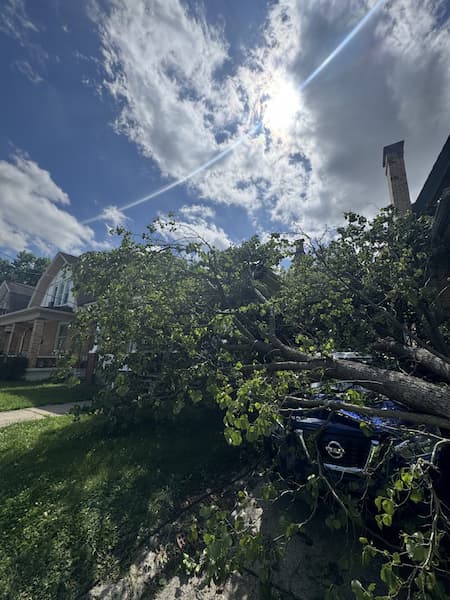
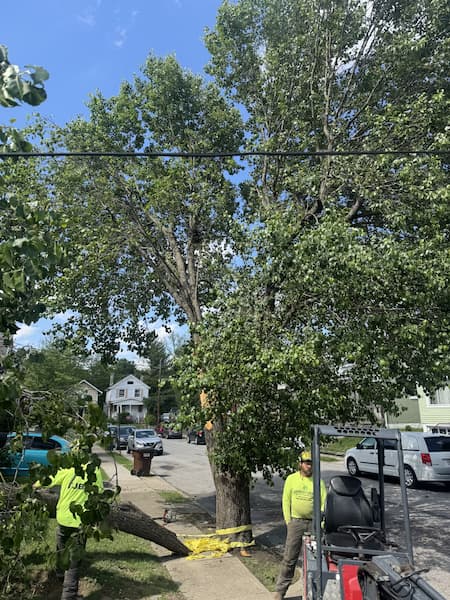
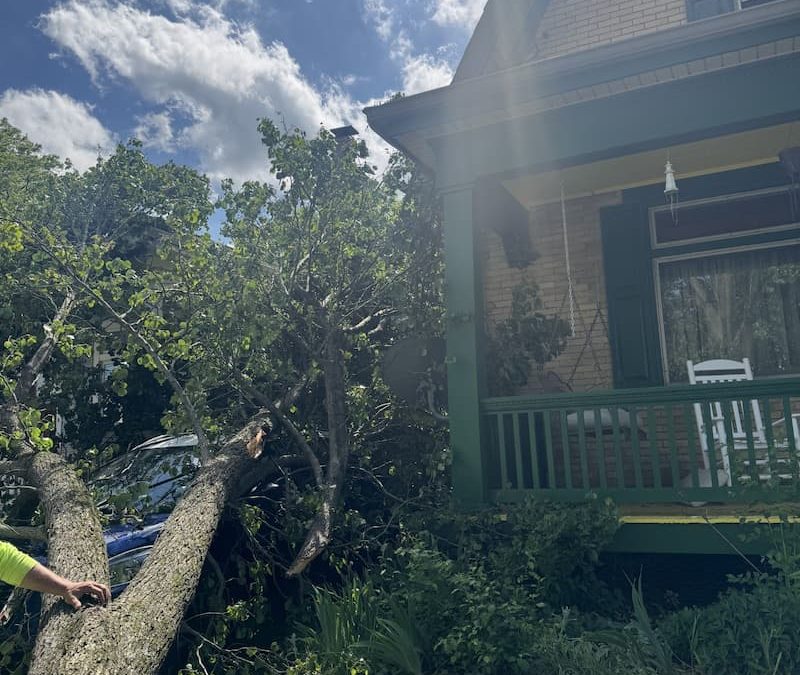
The more familiar and devastating trait of the Callery pear came to light as relatively young trees (15 to 25 years old) began to break apart. Many of the cultivars, especially the ‘Bradford’, have less than ideal structure, that when combined with their fast rate of growth, narrow crotch angles, and included bark equals eminent failure. Although some cultivars, like the ‘Aristocrat’, have better scaffolded branch arrangement, the majority pose extreme risk and are often topped and improperly pruned as a desperate attempt to reduce problems.