
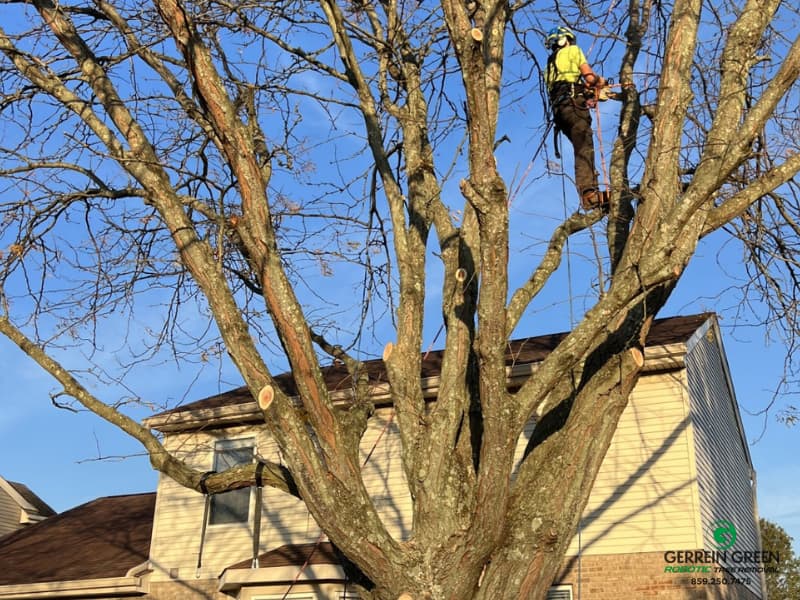
January is the perfect time to make tree care plans… Maintaining the health of your trees enhances curb appeal and increases your property value. Trees should be treasured and preserved for all the ecological benefits they provide as well. And since trees are often planted to memorialize life events or to remember those we have lost, we want to ensure their success. No matter your particular reasons, if you are a tree lover, you should consider the following recommendations.
1. Schedule a Winter Tree Inspection
Winter is an ideal time to have an arborist conduct a thorough inspection. When trees are dormant, it’s easier to see structural defects, dead branches, and pest infestations. Your arborist can evaluate a tree’s condition and identify necessary pruning or treatment before spring growth begins.
Tip: Ask your arborist about a “risk assessment” to identify trees that might pose a hazard during winter storms or heavy winds.
2. Schedule a Proper Spring Pruning
Pruning is not always necessary but should be done by a qualified arborist. The pruning should align with the tree species’ characteristics like rate of growth, wood strength, and expected mature size or shape. Pruning plans should also consider the tree’s age, structure, health, and location.
Recommended actions:
- To reduce risk of property damage, remove large dead, poorly attached or overweighted limbs from the canopy at least every other year.
- Prune young trees annually during the first 5 to 7 years after installation to establish optimal limb arrangement and overall structure.
- Directional prune tree branches that are encroaching on structures, but do not remove more than 25% of live foliage each year.
3. Consider the Soil Health and Structure
Tree health is greatly affected by the soil’s fertility, structure, and its composition. In Kentucky, the county extension offices provide free soil analysis and recommendations. Supplemental fertilization should target nutrient deficiencies identified through a laboratory test. Often, high nitrogen fertilizer will increase shoot growth and foliage but reduce a tree’s ability to ward off disease and insects. Organic soil amendments like compost are better options to naturally boost root health and tree vitality. Mechanical aeration of the soil within a tree’s root zone will reduce compaction and increase water infiltration.
4. Plan for Supplemental Watering
Trees need supplemental watering during extreme drought conditions and at specific times of year to function properly, photosynthesize, and prepare for the next year.
Lawn irrigation systems do not provide the deep and infrequent applications of water that are required by mature trees. Short daily periods of irrigation maintain turf by supplying moisture to the top 2 to 3” of a lawn but rarely reach tree roots.
Soaker hoses are recommended since they efficiently and slowly deliver adequate amounts of moisture to trees’ root zones. The general rule of thumb for large trees is approximately 1” of water per week when mother nature does not provide adequate rainfall.
Best practices:
- If necessary, remove excess mulch and only apply a 2 inch layer of new mulch. Keep mulch about 4 inches away from the trunk.
- Overtime, mulch can form an impenetrable barrier that deflects water. Turn or disturb the mulch layer a few times during the summer to ensure water reaches the tree roots.
6. Establish a Good Relationship with an Expert Arborist
The best tree care is consistent and informed. A professional arborist can help you design a year-round maintenance schedule tailored to your trees’ species, local climate, and soil type. Regular monitoring ensures your landscape stays healthy, safe, and beautiful for years to come.
Final Thoughts
Trees are important investments that deserve long-term care. By working with a certified arborist to plan ahead, you can ensure your trees not only survive but thrive through every season. Start scheduling consultations now to give your trees the best start in the new year.